
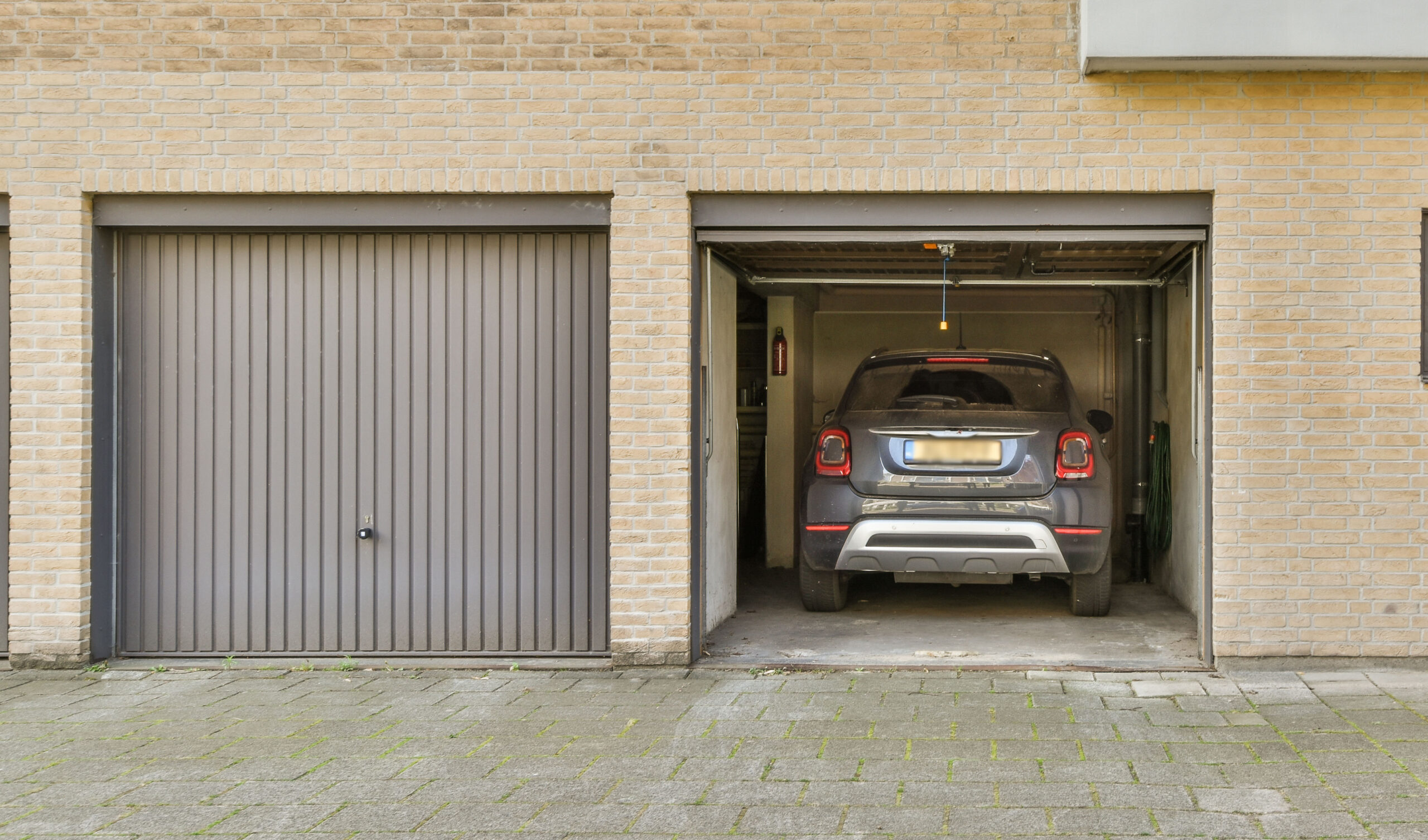
The garage is often the most vulnerable point of a residential building. The locks fitted as standard on tilt-up doors are not designed for security — and thieves know it. Here is what actually happens and what you can do about it.
Why the garage is an easy target
Out of sight, out of mind
Garages have two characteristics that make them attractive to thieves. They are often located in low-traffic areas, away from the flats above. And owners tend to neglect security: they invest in a reinforced front door and leave the garage with the standard factory lock.
In the garage we keep cars, bicycles and motorcycles — valuables that often exceed what is in the flat itself. Yet the level of protection is almost always lower.
The numbers speak for themselves
In Italy, approximately 136,000 vehicles are stolen every year — an average of 285 thefts per day, nearly one every five minutes. Only 45% are recovered. ACI data shows a concentration in the South: Campania, Lazio and Sicily alone account for almost 40% of cases nationally. But northern regions are not exempt: a lower statistical incidence does not mean zero risk, especially in urban residential garages.
Added to this are partial thefts, up 3.5% in the past year: the thief does not take the whole car — he strips it. Catalytic converters, wheels, airbags, ECUs disappear within minutes. For this type of theft too, a well-protected garage is the first barrier.
The main risk: forced entry through the lock
Among the techniques used to break into garages, forcing the lock remains the most widespread. Not because thieves are particularly well-equipped, but because the locks fitted on tilt-up doors are almost always off-the-shelf products designed for convenience, not resistance. An inadequate lock can be forced in a few seconds, without leaving visible damage.
The weak point of the tilt-up door
The internal release lever
Almost all tilt-up doors have an internal release lever. Its purpose is to open the door manually in case of motor or power failure — a useful and necessary function. However, it can become a point of vulnerability if it is not adequately protected.
Those who design these locks focus on functionality, not resistance to attack. In the vast majority of standard models, nobody has thought about how to protect the lever from the outside. As a result, this becomes a structural weakness of the system, not of the individual product.
A good cylinder is not enough
Upgrading the cylinder of a tilt-up door is useful, but not sufficient if the release lever remains accessible. Even an excellent cylinder is useless if the thief can simply bypass it. Therefore, the right solution must act on both fronts.
The POTENT catalogue includes locks for tilt-up doors with no internal release lever — structurally eliminating this vulnerability — and specific accessories to protect the lever on existing locks without needing a complete replacement.
Roll-up shutters
Different mechanism, similar risk
Roll-up shutters are common especially in commercial garages and in newer buildings. The mechanism is different from the tilt-up door — the shutter slides vertically on side rails instead of rotating on an axis — but the lock-related vulnerabilities are analogous.
The standard lock is almost always the weakest point. The standard cylinder does not offer adequate resistance to the most common forcing attempts. The choice of cylinder therefore becomes the decisive factor.
The flat-key cylinder
For roll-up shutters, the most suitable cylinder is the flat-key type. Compared to the traditional Euro cylinder, its lower profile fits better in the space available in the shutter lock. The internal build quality remains the parameter that matters: number of pins, presence of security features, resistance to forcing attempts.
POTENT has developed a flat-key cylinder with 5 combination pins — 3 active and 2 passive — specifically for roll-up shutters. The configuration significantly increases resistance compared to standard factory cylinders, without requiring any modification to the existing shutter.
Sectional doors
A third type, increasingly common
In buildings constructed over the last twenty years, the sectional door is increasingly common: rather than rotating on an axis (like the tilt-up) or sliding on side rails (like the roll-up shutter), the sectional door opens upwards via articulated horizontal panels that run along the garage ceiling. The mechanism is quiet, requires no space in front of the garage, and is well suited to automation.
In terms of security, the typical vulnerability is different from the other types: the panels can be lifted from below if the emergency mechanical catch is not engaged or is of poor quality. The manual release cylinder — identical in function to the tilt-up lever — is almost always a standard component, not designed to resist attack. Anyone with a sectional door should check this point just as carefully as they would with a tilt-up door.
How to choose the right protection
For the tilt-up door
The first step is to check whether the current lock has an internal release lever accessible from the outside. If so, there are two options: replace the lock with a model without a lever, or install a protective accessory that covers and shields the existing lever. In both cases, pairing it with a quality cylinder further reduces the risk.
It is also worth checking the thickness of the door’s sheet metal. Thin sheet metal is easy to drill through. In these cases, a steel reinforcement plate around the lock is a simple and effective intervention.
An additional level of protection comes from double-bit locks. Compared to a standard lock, the double-bit offers significantly higher resistance to the Bulgarian pick — one of the most commonly used tools for rapid garage door break-ins. POTENT locks for tilt-up doors incorporate an internal system that makes this forcing technique particularly difficult to apply, significantly increasing overall resistance to break-in.
For the roll-up shutter
The priority is the cylinder. A model with more combination pins and a flat profile is more resistant than the standard cylinder fitted originally. Before proceeding, check compatibility with the installed shutter model.
The double-bit argument applies to roll-up shutters as well: a lock with this mechanism significantly raises the resistance threshold against pick attacks. It pairs well with a quality flat-key cylinder, acting on two distinct aspects of vulnerability.
For the sectional door
The points to check are the panel mechanical catch and the manual release cylinder. If the manufacturer fitted a standard component, replacing it with a higher-quality cylinder is the most direct intervention. It is also worth making sure the catch is engaged every time the garage is left closed for an extended period.
Choosing a lock for sectional doors is more complex than for other types: models available on the market vary considerably in size and mounting interface, and a direct upgrade is not always possible. In these cases it is worth evaluating on a case-by-case basis, with the support of someone familiar with the product.
The garage in a residential building: an extra problem
In residential buildings with shared garages, all units often open with the same cylinder or cylinders of the same brand and model. This is exactly the same dynamic that makes the Topolino Decoder effective on building intercoms: anyone who knows the system can access multiple garages. Replacing the cylinder with a model different from the original, for this reason alone, is a sensible precaution.
Deterrence works for garages too
As with homes, deterrence works. An additional padlock, a visible camera, a motion-sensor light increase the perceived risk. Most garage thefts are opportunistic: those who carry them out look for the path of least resistance. A garage that presents visible obstacles is often skipped in favour of the less-protected neighbour’s.
Want to know which POTENT lock or cylinder is right for your garage? Our team is happy to help.
Contact us →POTENT’s position
Forty years of locks, not just for front doors
In over 40 years of manufacturing we have watched attention to home security grow, while attention to the garage has stayed low. It is a common paradox: hundreds of euros are invested in a reinforced door, while the garage holding a car worth tens of thousands of euros is left with the factory lock.
No protection is absolute — that holds for the garage as for any other closure. But solutions exist that make access difficult enough to deter the vast majority of opportunistic thieves. Lock without internal release lever, quality cylinder, sheet metal reinforcement, visual deterrence: every obstacle added shifts the problem to the less attentive neighbour.
Have questions about your garage security? Contact us: we are based in Settimo Torinese and are happy to respond by email too.
- The main risk: forced entry through the lock. In Italy, 136,000 vehicles are stolen every year; partial thefts (catalytic converters, wheels, ECUs) are up 3.5%.
- The standard lock is not enough: designed for convenience, not security. A good cylinder alone does not solve the problem if the release lever remains accessible.
- Solutions for the tilt-up door: lock without internal release lever, or a protective accessory for the existing lever, combined with a quality cylinder. Double-bit locks significantly increase resistance to the Bulgarian pick.
- Roll-up shutters: the cylinder is the key factor. A flat-key cylinder with more combination pins significantly increases resistance compared to the standard factory model.
- Sectional doors: the third most common type in recent buildings. Main vulnerability: the panel catch and the manual release cylinder, often a standard factory component.
- Garage in a residential building: if all garages have the same cylinder, replacing it with a different model is already a useful measure.
- Deterrence works: additional padlock, visible camera, sensor lighting. Every obstacle moves the thief towards easier targets.